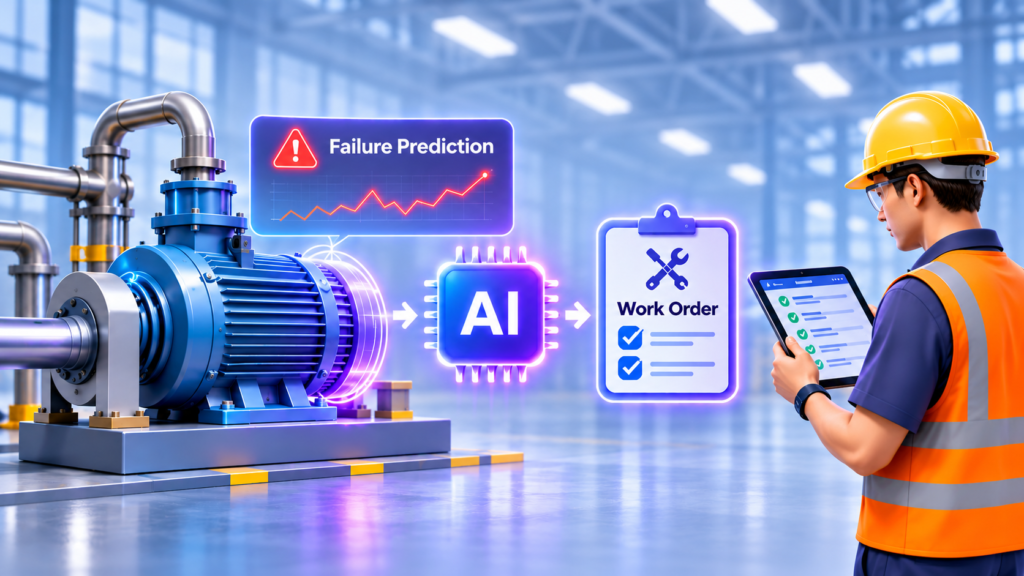

A forward deployed engineer is a software engineer who works side by side with a customer’s business team, inside their environment, building and adapting technology to solve a specific problem. They don’t wait for requirements to arrive through a ticket queue. They sit close to the people who feel the pain, write production code, and stay on the hook until the solution is actually being used.
Key takeaways
- A forward deployed engineer builds production software side by side with business users and owns adoption.
- The role was popularized by Palantir and has spread across AI and enterprise software companies.
- Embedded engineers win on context; offshore centers and dedicated teams win on scale and continuity.
- The strongest setup pairs a few forward deployed engineers with a capability center behind them.
The title has been around for a while. Palantir is usually credited with making it famous, and in the last couple of years it has spread quickly through AI companies and enterprise software firms. Suddenly everyone seems to be hiring for it.
We think the attention is deserved, but slightly misplaced. The title isn’t the interesting part. The model behind it is.
What the job looks like day to day
No two forward deployed engineers have quite the same week, but the shape is familiar. They spend real time with users, watching how work actually gets done, including the workarounds nobody bothered to write down. They build integrations, data pipelines, AI workflows and small interfaces that fit that reality. They ship something small, get feedback the same day, and adjust.
They also translate a lot. Business teams describe problems in business terms. Core engineering teams think in systems and roadmaps. The forward deployed engineer stands between the two and makes sure nothing gets lost.
Most importantly, they own adoption. The job isn’t finished when the code is merged. It’s finished when people stop using the old spreadsheet.
If that sounds like part engineer, part architect, part consultant, that’s about right.
Why the model caught on
Think about how software has traditionally been delivered in large companies. A business user explains a problem to an analyst. The analyst writes it up for a project manager. The project manager hands it to a development team, possibly in another city or another country. Every handoff loses a little detail. By the time something ships, the problem has often shifted.
AI has made that gap more expensive. A capable model on its own doesn’t do much for a business. It becomes useful when it’s wired into real workflows, real data and real permission rules, and that wiring is different at every company. It’s very hard to capture in a specification document. It’s much easier to solve with an engineer who can see the systems and talk to the people using them.
How it compares with other delivery models
Forward deployed engineering often gets framed as an alternative to an offshore development center or a dedicated development team. We’d argue they solve different problems.
| Model | What it is | Where it shines | Where it struggles |
|---|---|---|---|
| Forward deployed engineers | Engineers embedded with the business, building close to the problem | Context, speed of feedback, adoption | Expensive and hard to scale if everyone is embedded |
| Offshore development center | A dedicated engineering center elsewhere, delivering for one client | Capacity, continuity, cost | Distance from users can slow feedback |
| Dedicated development team | A partner team assigned full-time to your roadmap | Flexible capacity without hiring | Only as good as its integration with your teams |
Forward deployed engineers win on context. The other two win on scale and staying power. Most companies need both.
Our view: a few people up front, a strong team behind them
The setup we believe in is simple. Put a small number of forward deployed engineers close to the business. Back them with a larger engineering capability, such as a dedicated team or a global capability center, that builds the platform pieces, runs testing and security, handles operations and takes on the volume of work that doesn’t need to happen next to the user.
The engineers up front find the problem, shape the solution and keep feedback tight. The team behind them makes sure it’s built properly and keeps running long after the first release.
We like this for three reasons. Context doesn’t get lost, because the people closest to the problem have a direct line to the people building. It scales, because you only embed the few people who make the biggest difference. And knowledge stays put, because when someone moves on, the code, documentation and runbooks live with the wider team.
It’s also how we think about dedicated AI engineering teams: close to the business where it counts, with depth behind them.
What has to be true for it to work
We’ve seen the model work well and we’ve seen it fizzle. The difference usually comes down to three things.
First, ownership. Every embedded engineer should be tied to a business outcome and a named sponsor on the business side. Without that, they drift into being general helpers.
Second, access. Embedding someone and then making them wait three weeks for system credentials defeats the point. Access to data, systems and users has to be sorted before they arrive.
Third, a shared scorecard. The engineer and the business team should be watching the same number, whether that’s cycle time, error rate or adoption. If success means different things to each side, it’ll feel like failure to one of them.
When it’s the wrong choice
This isn’t a universal answer. If the work is well understood and stable, being close to the user adds little. If the business can’t offer real access to systems or people, the engineer can’t do the job. And if no one on the business side is willing to own adoption, the best engineer in the world won’t change much.
In those cases, a well-run dedicated team with good product management will usually serve you better, and cost less.
Frequently asked questions
What does a forward deployed engineer do day to day?
They spend time with business users to understand a problem, then build and adapt software, integrations or AI workflows to fix it. They iterate quickly and stay involved until the solution is actually adopted.
How is a forward deployed engineer different from a solutions engineer?
A solutions engineer usually supports the sales process with demos and technical scoping. A forward deployed engineer writes production code after the deal is done and stays responsible for the solution working in the customer’s environment.
Can forward deployed engineers work alongside an offshore development center?
Yes, and it’s often the best combination. A few embedded engineers provide the context, while a larger offshore or capability center handles platform work, testing and operations at scale.
Curious how embedded engineers and a capability center fit together in practice? Read more about our forward deployed engineering model, or learn who we are.