



RAG
(KNOWLEDGE-BASED AI)
RAG Development Services, Engineered for Production.
Source-grounded answers over your documents, tickets, contracts, and code – with hybrid retrieval, access control, eval harnesses, and continuous quality monitoring.
Why Most RAG Projects Disappoint
They treat retrieval as a setup step instead of the centre of the system. Vector search is one ingredient – and the smallest one. Production RAG is hybrid retrieval, re-ranking, calibration to real user queries, and continuous eval against ground-truth Q&A sets.
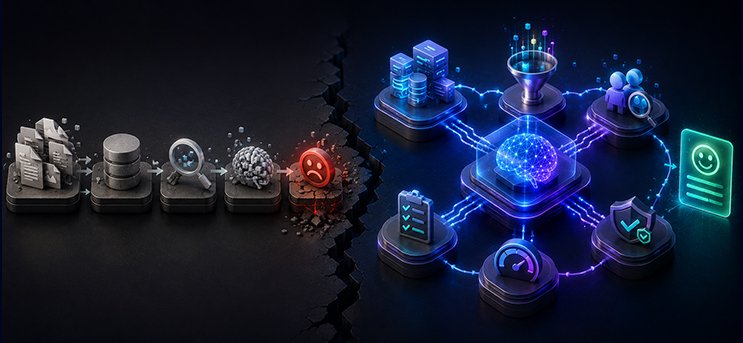
Our Reference Architecture
Ingestion
Connectors for SharePoint, Confluence, Drive, Slack, Jira, GitHub, custom databases, and file estates.
Semantic-boundary chunking; chunk size and overlap calibrated to your corpus.
Indexing
Hybrid (semantic + lexical) - typically dense vectors plus BM25 / OpenSearch.
Retrieval
Hybrid scoring with cross-encoder re-ranker for top-k precision.
Claude (primary), with fallbacks; structured output where the consumer needs it.
Eval
Golden Q&A sets + LLM-as-judge calibrated against human labels.
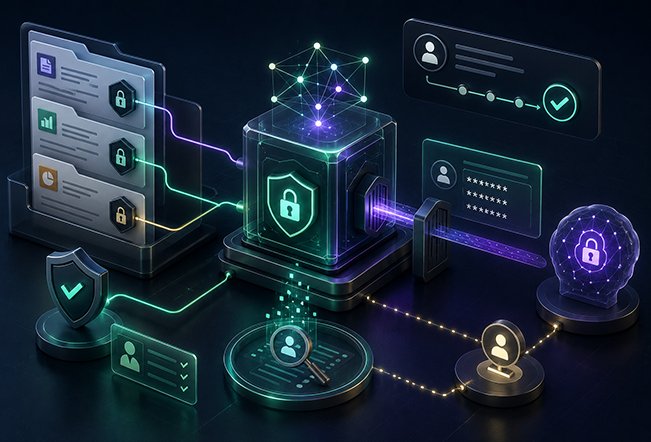
Access Control - Always On
Enterprise RAG fails the moment a user sees content they should not. We respect your existing entitlements – never bolt on a new permission system.
- Document-level and section-level ACLs honoured at retrieval time, not at the application layer.
- Token-level audit: every answer can be traced back to the user, the query, and the documents retrieved.
- PII redaction in transit; sensitive fields masked from model context where policy requires.
A RAG system is only as good as the answer it gave the user last week. We build the eval harness alongside the system.
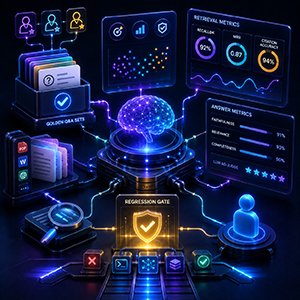
- Golden Q&A sets. Curated with subject-matter experts; rotated and expanded over time..
- Retrieval-level metrics. Recall@k, MRR, citation accuracy per question class.
- Answer-level metrics. Faithfulness, relevance, completeness – measured by LLM-as-judge calibrated to human labels.
- Regression gates. No prompt, model, or retrieval change ships unless eval passes the previous best.
Human review is the final layer not the only one. The result: AI-suggested code carries the same provenance, attestation, and quality bar as code written by hand.
Every modernization project lives or dies at the cutover. We engineer for safety from day one.
Customer support
Agent-facing assistant grounded in product docs and ticket history.
Legal & compliance
Contract Q&A, policy lookups, regulation-tracking summaries
Engineering
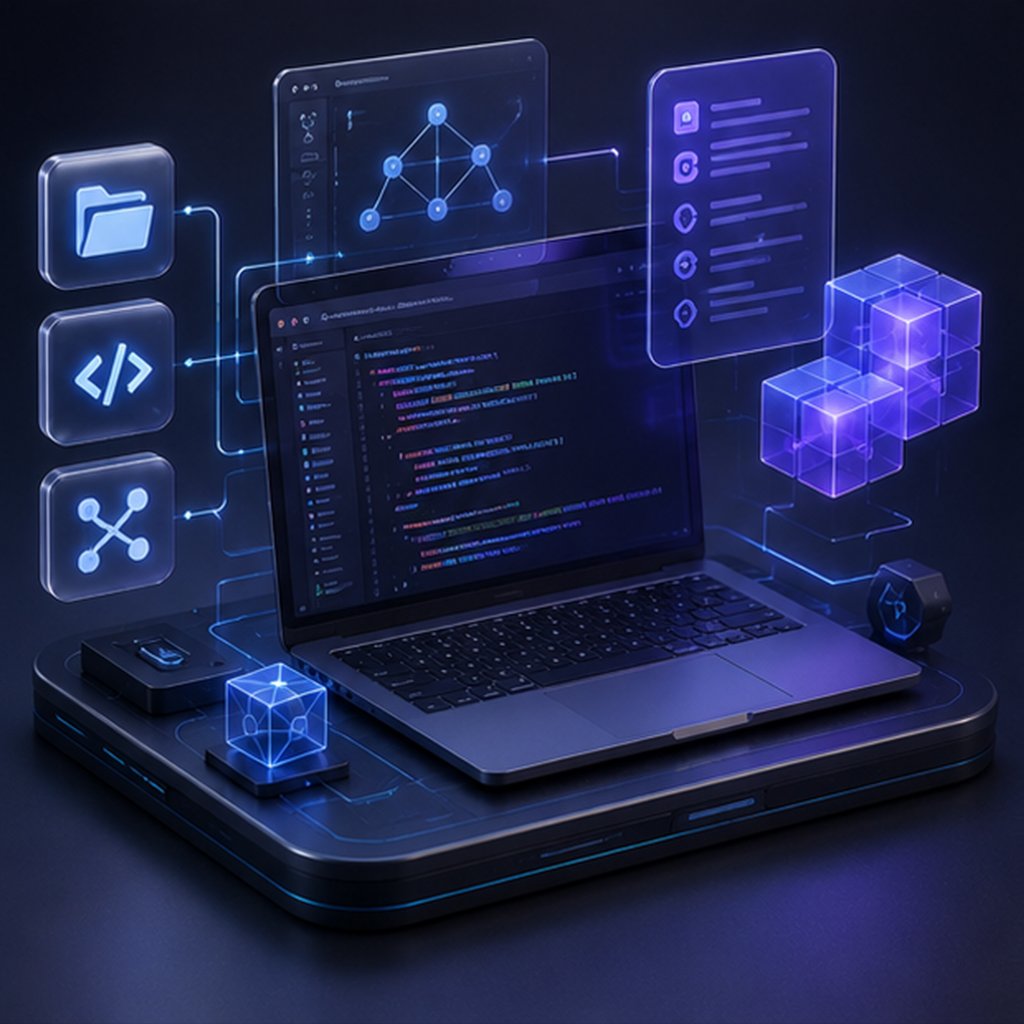
Code-aware assistants over private monorepos and architectural decision records.
Clinical / healthcare
Guideline lookups with mandatory citations and confidence display.
Manufacturing
SOP search, technician assistants, equipment knowledge bases.
BFSI
Policy Q&A, KYC summarisation, regulatory-document interpretation
Healthcare
Clinical-guideline Q&A, prior-auth policy assistants.
Retail
Merchandiser knowledge assistants, store-associate copilots
Supply Chain
Supplier-contract Q&A, exception-policy lookups.
Ready to Build Production RAG?
Book a 60-minute architecture review. We will walk through your highest-value RAG use-case, agree the success criteria, and put an 8–12-week path-to-production plan on the table.
FAQ
Frequently Asked Questions
Can we keep our data on-prem or in our own cloud?
Yes. Most engagements run entirely in your tenant. Frontier models are accessed via private endpoints with zero-retention configuration. Self-hosted open-source generation is available for the most sensitive use-cases.
How do you avoid hallucination?
No production system is hallucination-free. We minimise it by grounding strictly in retrieved sources, refusing to answer when retrieval recall is low, and showing citations on every answer. The hallucination rate is then a measured number, not a hope.
How long until we see production?
First production deployment in 8-12 weeks for a single domain. Expansion to additional domains typically adds 4-6 weeks per domain because the platform is already in place.